5 Important Facts about Bowing Basement Walls Charlottesville, VA
- What Are Bowing Basement Walls?
- What Causes This Problem?
- Settling of the foundation: The basement walls are part of the foundation. Hence, the walls have to be strong to sustain the weight of the building. If your building’s structure is weak, the settling of the foundation can cause basement wall bowing. As the foundation starts to settle, it can exert a lot of weight on the basement walls and lead to basement wall bowing.
- Increased hydrostatic pressure: Bowing basement walls can also occur as a result of increased hydrostatic pressure. When the soil that surrounds the foundation and basement walls becomes saturated with water, its weight increases. The result is that the wet soil exerts a lot of lateral pressure on the basement walls, which can cause them to bend.
- Frost heave: Constant freezing and expansion of the soil around the basement walls can cause the walls to bend inwards.
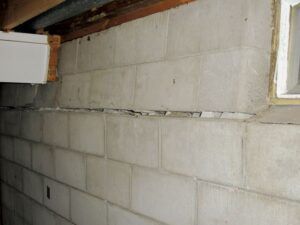
- Large roots: As large roots near the foundation and basement walls grow, they push against the walls, causing them to bow in.
- What Are the Signs of Basement Wall Bowing?
- Stair-step or horizontal basement wall cracks.
- Signs of bulging, buckling, or inward movement of the basement walls
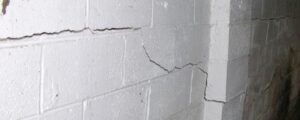
- Walls that appear to lean at the top
- What Is the Implication of Cracking Due to Basement Wall Bowing?
- What Should You Do If You See Bowing Basement Walls?