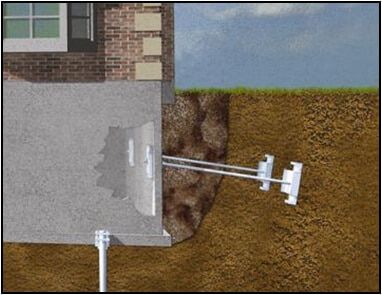
When it comes to foundation repair, most homeowners focus on cracks, sloping floors, or water intrusion, the visible signs of trouble. But thereal stability of your home starts deeper, in a component you may never see: thefoundation footings. These structural elements play a critical role in supporting your home, and if they fail, everything above them is at risk.
So, what exactly are footings? Why are they essential? And how can you tell if they’re compromised? In this article, we’ll take a deep dive into foundation footings, what they do, how they fail, and how foundation professionals repair and reinforce them to keep your home safe for years to come.
🔑 Key Takeaways
- Foundation footings distribute the weight of your home into the soil below.
- When footings are weak, undersized, or deteriorated, they can lead to major structural issues.
- Footing failure causes cracks, settlement, wall separation, and uneven floors.
- Professional repairs include underpinning, pier systems, or complete footing replacement.
- Early detection and action can prevent extensive damage to the rest of the structure.
What Are Foundation Footings?
Footingsare concrete bases that sit beneath your home’sfoundation wallsor piers. They spread out the load of the house and help transfer weightevenlyinto the soil.
Think of them as the “shoes” your house stands on — providing both support and balance. Without properly sized and positioned footings, your home is vulnerable to uneven settlement, cracking, and even collapse in severe cases.
Types of Foundation Footings
Depending on your home’s design, the soil type, and local building codes, you may have one of the following:
1. Continuous Footings
Used beneath full foundation walls (common in basements). They run in straight lines under walls to support distributed loads.
2. Isolated or Spot Footings
Used under individual columns or piers. Often found in crawlspaces or porch structures.
3. Slab Footings (Thickened Edge)
Used in slab-on-grade construction. The edge of the concrete slab is made thicker to act as a footing.
Why Footings Matter
Your home exerts thousands of pounds of pressure per square foot. Footings:
- Distribute this weight over a larger surface area
- Prevent uneven pressure points that cause settlement
- Anchor the home to stable soil layers
- Act as the base for the entire structural system
When they fail, the foundation above them no longer has balanced support — and structural damage spreads quickly.
What Causes Foundation Footing Failure?
1. Poor Soil Conditions
Expansive clay, loose fill, or organic soils can shift, compress, or erode beneath the footings, removing support.
2. Improper Footing Design
If the original footings were too small, too shallow, or lacked reinforcement, they may not be able to handle the load over time.
3. Water Damage and Erosion
Water flowing under or around the foundation can erode supporting soil or cause frost heave that lifts and damages footings.
4. Aging or Deterioration
Older concrete may crack, crumble, or lose strength — especially if it was exposed to excessive moisture or poor drainage.
5. Tree Root Intrusion
Aggressive tree roots can grow around or beneath footings, displacing soil and cracking concrete.
Signs of Failing Footings
It’s not always easy to detect footing failure, but here are some red flags:
If multiple symptoms are occurring on one side or corner of your home, it’s often a sign thata footing has begun to fail.
Real-Life Example: What Happens When Footings Give Way
A homeowner in Roanoke, VA, noticed stair-step cracks in their basement wall and that their front porch had begun tilting slightly. The floor near the front entrance had also become uneven, and the door stuck during humid days.
Seal-Tite Basement Waterproofing conducted a structural inspection and found:
- A continuous footing under the front foundation wall had cracked and settled.
- Soil beneath it had eroded due to poor surface drainage.
- The front porch footings were undersized and unreinforced.
Solution Provided:
- Helical piers were installed beneath the failed footing to transfer the load to deeper, stable soil.
- Porch footings were rebuilt with reinforced concrete.
- The yard was regraded and gutter extensions added to improve drainage.
The structure was stabilized, and further movement was prevented — saving the homeowner from more costly repairs down the line.
How Professionals Repair Failing Footings
1. Underpinning with Piers
Steel piers (helical or push piers) are driven deep into stable soil and attached to the footing to support and lift the foundation.
- Benefits: Non-invasive, long-lasting, used to correct settlement.
2. Pouring New Footings
If footings are crumbling or were poorly constructed, they can be replaced or “sistered” with new, reinforced concrete.
- Benefits: Improves capacity, brings structure up to modern code.
3. Grouting and Soil Stabilization
Pressure grouting or chemical injections can fill voids and firm up loose soils beneath existing footings.
- Benefits: Addresses soil failure without major excavation.
4. Drainage Corrections
In nearly all cases, fixing the drainage around the home is essential to prevent recurrence:
- French drains
- Downspout extensions
- Grading away from the home
- Basement waterproofing systems
How to Prevent Footing Problems
Even if your foundation seems stable today, taking steps to protect your footings can prevent future issues:
- Maintain proper yard grading (6" slope over 10 feet away from home)
- Keep gutters clean and downspouts extended
- Avoid overwatering landscaping near the foundation
- Plant trees away from the home, or install root barriers
- Don’t ignore small cracks or uneven floors — have them inspected early
FAQs: Foundation Footings
How deep should footings be?
It depends on your region’s frost line and soil type, but footings should generally be at least12–24 inches deep, and below the frost line to prevent heaving.
Are footings the same as the foundation?
No. Footings are thebaseof the foundation. They sit beneath the concrete wall or slab and spread the load into the soil.
Can a footing be repaired without lifting the house?
Yes. Many modern repair methods likehelical pierscan support or lift foundations without total excavation or lifting the entire structure.
How much does footing repair cost?
It varies widely based on access, damage, and soil conditions. Small underpinning jobs may cost a few thousand dollars; full rebuilds can be more.
Will home insurance cover footing failure?
Typically not — unless the damage is sudden and accidental (like a plumbing break). Most policies exclude damage from soil movement or gradual deterioration.
Conclusion: Your Foundation Is Only as Strong as Its Footings
Foundation footings may be out of sight, but they should never be out of mind. These structural elements bear the full weight of your home and distribute that pressure into the ground. When footings fail — due to soil, water, age, or poor construction — the entire structure is compromised.
Fortunately, modern footing repair techniques make it possible tostabilize, lift, and protectyour foundation from the bottom up. Whether you're seeing cracks, uneven floors, or just want peace of mind, Seal-Tite Basement Waterproofing is here to help.
Contact us today for a professional foundation inspection. We’ll check your footings, analyze the soil, and recommend the right repair so your home stands strong for generations to come.