
You’ve probably noticed cracks on your basement walls at some point and wondered, “Does this mean I have a leak?” Well, the answer isn’t always a straightforward ‘yes’ or ‘no’. While some cracks are merely cosmetic, others can be harbingers of more serious issues. It’s all about understanding what you’re dealing with. Are they hairline cracks or wider? Is there any moisture present? These clues can help you determine if you’re just dealing with normal house settling, or if it’s time to call in a professional for a more thorough investigation.
Key Takeaways
- Not all cracks in basement walls indicate leaks, but wider or horizontal cracks are red flags for potential moisture problems.
- Hairline cracks are usually cosmetic and less concerning, while vertical cracks often result from settling or humidity changes.
- Moisture on walls or floors, efflorescence, surface changes, and water pooling near the foundation are concrete signs of potential leaks.
- Cracks accompanied by water leakage signify significant moisture issues and require immediate repair to prevent mold growth and structural damage.
- Regular inspections, proper drainage, soil grading, crack sealing, and humidity control are preventive measures to prevent basement wall cracks and potential leaks.
Understanding Basement Wall Cracks
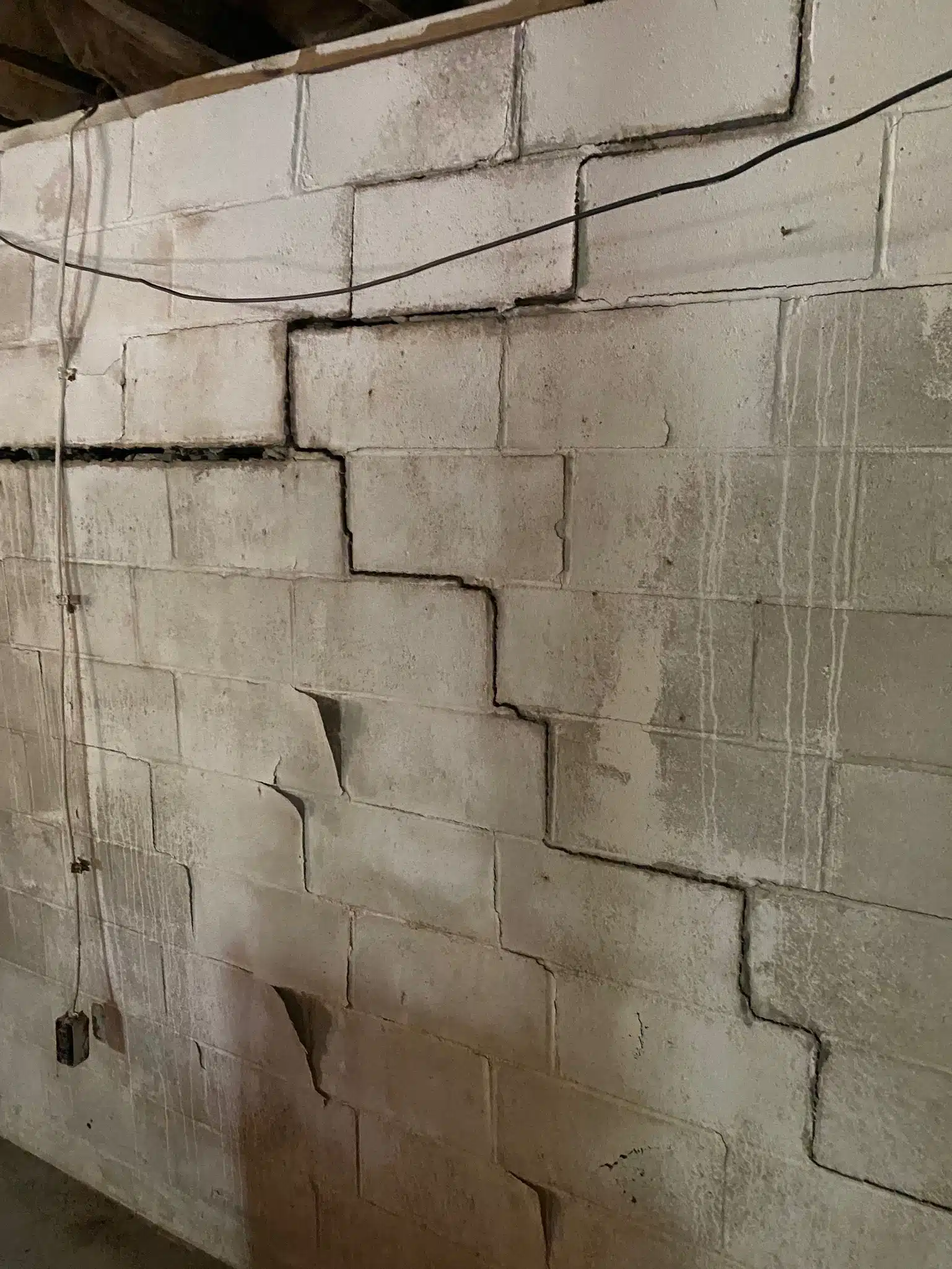
Ever noticed a zig-zag line creeping up your basement wall? That’s a crack, and it’s something you shouldn’t ignore. Now, don’t panic just yet. Not all cracks spell disaster. It’s important to understand what they mean.
You’ll find two types of cracks commonly: horizontal and vertical. A vertical crack, running up and down, is often the result of settling or shrinking. They’re less serious and can be easily fixed.
Horizontal cracks, on the other hand, running side to side, are a cause for concern. They indicate pressure from soil or water pushing against the wall, which could lead to severe structural damage.
Size also matters. A hairline crack, less than 1/8 inch wide, is usually not a big deal. But a wider crack could signify a more serious problem.
Then there’s location. Cracks near corners or windows are often due to natural settling. Cracks in the middle of a wall could be more problematic.
Common Causes of Basement Cracks
Now that you’re familiar with the types and implications of basement wall cracks, let’s explore what actually causes them. There’s no single culprit. Instead, a combination of factors often contributes to the problem.
A primary cause is hydrostatic pressure. This is the pressure that builds up in the soil around your basement during periods of heavy or prolonged rainfall. When the pressure becomes too much, it can force a crack in your basement wall.
Freeze-thaw cycles can also cause cracks. When the soil around your basement freezes, it expands. Then, when it thaws, it contracts. This constant expansion and contraction can put stress on your basement walls, causing them to crack.
Another common cause is soil settlement. Over time, the soil around your basement can settle, or compact. This can put uneven pressure on your basement walls, leading to cracks.
Finally, poor construction can cause cracks. If your basement walls weren’t constructed properly, they may not be able to withstand the pressure from the surrounding soil.
In summary, the most common causes of basement cracks are:
- Hydrostatic pressure
- Freeze-thaw cycles
- Soil settlement
- Poor construction
Types of Basement Wall Cracks
Let’s now look at the different types of basement wall cracks you may encounter.
You’ll find that they can be either horizontal or vertical, and range from hairline to wide cracks.
Also, you’ll see that cracks can appear in concrete blocks, each with their own implications for your basement’s integrity.
Horizontal vs. Vertical Cracks
Your basement’s resilience can be put to the test when cracks start forming on its walls. Not all cracks are created equal, though. There’s a significant difference between horizontal and vertical cracks, and understanding these distinctions is essential.
Vertical cracks are usually less severe and more common. They can often occur due to settling or minor shifts in your home’s structure, typically caused by changes in the soil or humidity levels. You shouldn’t ignore them, but they’re usually not cause for immediate panic.
On the other hand, horizontal cracks are more serious. They suggest more significant structural problems, such as excessive lateral pressure from the soil around your home. If you spot these, it’s time to call a professional without delay.
Here’s a quick rundown:
- Vertical cracks: less severe, often due to settling or humidity changes
- Horizontal cracks: more serious, suggest significant structural issues
- Deal with vertical cracks: monitor them, but don’t panic
- Deal with horizontal cracks: call a professional immediately
Hairline vs. Wide Cracks
While the direction of cracks in your basement walls is an important factor to evaluate, the width of these cracks also plays an essential role in determining the severity of the issue.
Hairline cracks, as the name suggests, are thin as a strand of hair. They’re generally less than 1/8 inch wide and mightn’t penetrate deeply into the wall. You’ll often find these cracks in newly constructed houses as they settle or in older homes due to seasonal changes.
On the other hand, wide cracks are more than 1/8 inch wide. They may indicate a more serious problem, such as structural damage or water pressure from outside your house. These cracks widen over time and can let water seep into your basement, leading to potential leaks or even flooding.
It’s vital to keep an eye on these cracks. Don’t panic if you spot hairline cracks; they’re usually not a cause for concern.
But if you see wide cracks, it’s time to call a professional. They’ll assess the situation and guide you on the right path to fix it. It’s always better to be safe than sorry.
Cracks in Concrete Blocks
Cracks in concrete blocks of your basement wall can run the gamut from innocuous to severe. They don’t always signal a water leak, but they’re often a sign of structural issues.
These cracks can be caused by a variety of factors, including soil pressure, frost heave, and even poor construction. It’s essential that you’re aware of these cracks and understand what they could mean for your home.
Here are some key aspects to evaluate:
- Type of crack: Horizontal, vertical, or diagonal cracks each indicate different problems. You’ll need to identify the type to understand the issue fully.
- Location of crack: Cracks closer to the corners or center of the wall may suggest different causes and levels of severity.
- Width of crack: A wider crack often means more serious problems. If the crack is wider than 1/8 inch, you should consult a professional.
- Evolution of crack: Keep an eye on the crack over time. If it’s widening or becoming more extensive, this is a clear sign of ongoing problems.
Don’t ignore these signs. Small cracks can become big problems if they’re not addressed promptly.
Identifying Potential Leak Signs
Spotting the telltale signs of potential leaks is a crucial step in maintaining the health of your basement walls. These signs aren’t always as straightforward as water seeping in. You’ve got to keep an eye out for subtler indicators too!
Moisture is a key sign. It doesn’t always mean a leak, but it’s often a precursor. Look for damp patches on walls or floors. They may be accompanied by a musty smell—an indicator of mold growth.
Also, watch out for efflorescence, a white, powdery substance on your walls. It’s a result of water evaporation leaving behind minerals.
Changes in the wall surface can also indicate potential leaks. Paint bubbling or peeling, or wallpaper coming loose, are signs of hidden moisture. Foundation cracks are another red flag. Sure, not all cracks leak, but larger, horizontal ones often do.
Lastly, consider the outside. Water pooling near your foundation after rain is a warning sign. It suggests the ground isn’t effectively draining, increasing the risk of leaks.
Preventing Basement Wall Cracks
To maintain the integrity of your basement walls, proactive preventative measures are key. You don’t want to wait until you’re dealing with a major problem before you take action. Instead, you should be proactive in preventing cracks from forming in the first place.
There are several things you can do to help prevent cracks in your basement walls:
- Regularly inspect your walls for signs of stress or damage. This will allow you to catch any potential problems early before they become major issues.
- Maintain proper drainage around your home. Water should be directed away from your house to avoid putting pressure on your basement walls.
- Avoid planting large trees near your home. Their roots can grow into your basement walls, causing cracks over time.
- Keep the soil around your home at a consistent moisture level. Soil that’s too dry can shrink and pull away from your foundation, while soil that’s too wet can put pressure on your walls.
Effective Crack Repair Solutions
So, what should you do if you already have cracks in your basement walls? Don’t panic! There are effective repair solutions you can try before calling in the professionals.
First, assess the damage. If the cracks are small, hairline fractures, you might be able to handle them yourself. Grab a tube of concrete repair caulk. It’s easy to use and relatively cheap. Simply clean the area, then apply the caulk into the crack, smoothing it out as you go.
If the cracks are larger, you’ll need a concrete patch. This requires a bit more work. You’ll need to clean the crack, apply a bonding adhesive, then pack the crack with the patching compound.
It’s a bit more labor-intensive than the caulk, but it’s still a task you can manage.

When to Seek Professional Help
While you can manage minor cracks in your basement walls, there are times when professional help is necessary. This is especially true when you’re dealing with deep, wide cracks, or if the cracks have caused significant water leakage.
Professionals have the right equipment and expertise to handle these complex situations.
You should consider seeking professional help in the following instances:
- If cracks continue to expand: This could indicate serious structural issues that need immediate attention.
- When cracks are accompanied by water leaks: Water leaks can cause severe damage to your property if not addressed promptly.
- If you notice horizontal cracks: These are more dangerous than vertical ones and suggest possible foundation issues.
- When there’s mold around the cracks: Mold is harmful to your health and indicates a moisture problem.
So, do all basement wall cracks mean leaks? Not necessarily. But they can be a heads up for potential issues. While hairline cracks might not bother you, larger ones, especially with moisture, could signal serious moisture problems. Understanding the type and cause of these cracks helps you decide if intervention is needed. Remember, prevention is key. But if you’re unsure or the problem persists, don’t hesitate to seek professional help.

Seal-tite Basement Waterproofing Co. is a full service basement environment contractor. We carry an A+ Better Business Bureau rating. We repaired over 40,000 homes and structures in Virginia, West Virginia, Tennessee, and North Carolina. We are fully insured and licensed. We have worked in all types of locations, including residential and commercial locations, government agencies, colleges, hospitals, churches, and condo associations.
Seal-tite® offers a lifetime transferable warranty. We carry a Class A Contractor’s License and we are fully insured. Our satisfied customers range from government agencies to businesses, hospitals, colleges, churches, and thousands of homeowners. Your home is probably the single largest investment you will make in your lifetime. Don’t wait, call Seal-tite® to help make your home dry, safe and livable.

