
You’ve just discovered water in your basement and you’re considering waterproofing to prevent future damage. But before you break the bank, you’re probably wondering, “does my home insurance cover basement waterproofing?” Most policies don’t include this since it’s seen as a maintenance issue, not accidental damage. However, there could be exceptions. Isn’t it worth exploring your policy more closely to be certain?
Key Takeaways
- Standard home insurance typically does not cover basement waterproofing as it’s considered a maintenance issue.
- Coverage may apply if water damage is sudden and accidental, not due to neglect or pre-existing issues.
- Waterproofing repairs could be covered if damage is caused by a peril included in the policy.
- Flood damage, often a cause for basement waterproofing, is usually not covered in standard home insurance policies.
- Consulting with an insurance agent is recommended to understand specific policy details related to basement waterproofing.
Understanding Home Insurance Coverage

First, let’s look at home insurance types. They’re broadly categorized into several forms, with the most common being HO-3. It’s a hybrid type offering open perils coverage for your home and named perils coverage for personal property. This means it covers damage to your home from any event unless explicitly excluded, while personal property is covered only for events named in the policy.
Speaking of exclusions, policy exclusions are specific situations or events that your home insurance won’t cover. Common exclusions include damage from earth movement, floods, and neglect, among others. It’s crucial to read your policy’s fine print to understand these exclusions.
In terms of basement waterproofing, it’s generally not covered unless you have an add-on or endorsement for water backup and sump pump overflow.
However, that’s a topic for another section. For now, focus on understanding your policy’s ins and outs, and you’re halfway there.
Basics of Basement Waterproofing
As we move forward, it’s critical for you to understand the basics of basement waterproofing.
This includes the different methods used in waterproofing and the common problems you might encounter.
Having this knowledge will equip you to make informed decisions about protecting your home.
Understanding Basement Waterproofing
In the realm of home maintenance, understanding the basics of basement waterproofing is crucial. This process protects your home from basement moisture and water intrusion, two common issues that can lead to costly damages if left unchecked.
To identify the need for waterproofing, it’s crucial to be aware of common signs of water intrusion. These may include a musty odor, visible mold, damp spots on walls or floors, and water accumulation.
| Signs of Water Intrusion | What it Indicates |
|---|---|
| Musty Odor | Presence of moisture |
| Visible Mold | Chronic dampness |
| Damp Spots | Possible leaks |
| Water Accumulation | High water intrusion |
Once you’ve identified these signs, taking action is necessary. But remember, waterproofing isn’t a one-size-fits-all solution. The method you choose will depend on the severity and source of the water intrusion, which we’ll delve into in the next section.
Understanding basement waterproofing is not just about preserving your space. It’s also a proactive step in safeguarding your property’s structural integrity. After all, prevention is less costly and stressful than dealing with the aftermath of water damage.
Methods of Waterproofing
Building on your understanding of water intrusion signs, you’re now equipped to explore the various methods of basement waterproofing. Key tactics include interior drainage and exterior sealing, each with its own unique advantages.
Interior drainage systems play a crucial role in preventing water buildup. A properly installed interior drainage system catches the water that enters your basement and directs it to a sump pump. This pump then expels the water outside your home, ensuring that your basement remains dry and free from potential water damage.
Exterior sealing, on the other hand, works to stop water from entering the basement in the first place. This process involves applying a waterproofing membrane or coating to the outside of your basement walls. Additionally, a french drain might be installed to divert water away from your home.
Choosing the right method depends on several factors, such as the severity of the water intrusion, the construction of your home, and your budget.
It’s crucial to consult with a professional who can assess your situation and recommend the most effective approach. Remember, proper basement waterproofing can save you money in the long run, and potentially, on your home insurance too.
Common Waterproofing Problems
While you might think your basement is well-protected, several common problems can compromise its waterproofing measures.
Inadequate drainage solutions are a major culprit. For instance, your home might be lacking an efficient gutter system or have insufficient grading, leading to water pooling around the foundation and eventually seeping into your basement.
Even if you’ve got excellent drainage, you could still face issues if you have poor moisture management. This includes inadequate ventilation which can lead to high humidity levels and condensation, or the use of improper materials that absorb moisture, such as certain types of insulation or wall coverings.
A more insidious problem is the presence of cracks in your foundation walls or floor. These not only allow water to infiltrate your basement but can also undermine the structural integrity of your house.
Lastly, a faulty or non-existent sump pump can also cause water to accumulate in your basement, especially during heavy rain or snowmelt.
Does Insurance Cover Waterproofing?
You might be wondering, does your home insurance policy cover basement waterproofing?
It’s essential to understand the specifics of your insurance policy, including the details of any coverage for basement waterproofing.
Be aware, there may be exceptions and limitations that could affect your claim.
Understanding Home Insurance Policies
Often, homeowners find themselves questioning whether their home insurance policy covers basement waterproofing. To answer this, you need to understand the basics of home insurance terminology and be aware of policy exclusions.
Your home insurance policy is a contract between you and your insurance provider. It details what is covered, what isn’t, and under what circumstances. Each policy is different, so it’s crucial to read the fine print.
Policy exclusions are specific circumstances or events that your insurance doesn’t cover. These exclusions are clearly stated in your policy. If basement waterproofing is listed as an exclusion, your insurance won’t cover it.
To help you understand, here’s a simple table:
| Home Insurance Term | Description |
|---|---|
| Coverage | What your policy pays for. |
| Exclusion | What your policy doesn’t pay for. |
| Limit | The maximum amount your policy will pay. |
Basement Waterproofing Coverage Details
Let’s move forward with the question on many homeowners’ minds – does home insurance cover basement waterproofing? The short answer is, it depends. It largely hinges on your policy details and the nature of the damage.
Basement waterproofing is essentially a type of flood prevention, aiming to protect your home from water damage. It can significantly increase your property value as it safeguards the structural integrity of your home. However, not all insurance policies automatically cover this.
Typically, standard home insurance policies don’t include coverage for waterproofing. They usually cover sudden and accidental water damage, but not the damage that arises due to lack of maintenance or wear and tear.
So, if your basement needs waterproofing due to ongoing humidity issues or cracks developed over time, it’s likely the expenses won’t be covered.
On the other hand, if a covered peril, such as a burst pipe, floods your basement and you need waterproofing repairs as a result, your policy may cover it.
Exceptions and Limitations
Despite the general rule of thumb, there are exceptions and limitations in terms of home insurance covering basement waterproofing. Many policy nuances dictate what’s covered and what isn’t. It’s important for you to understand these intricacies to avoid unpleasant surprises in case of a claim.
Primary exclusions explained in most policies include:
- Maintenance-related issues: If water damage is due to lack of maintenance or negligence, your insurer won’t cover the costs.
- Sump pump failures: Most standard policies don’t cover water damage due to the failure of a sump pump.
- Flooding: Home insurance policies typically exclude damage caused by flooding, which is often the case with basement water problems.
- Pre-existing conditions: If you were already aware of water issues in your basement when you purchased the policy, the insurer may refuse to cover the costs.
- Poor construction: If poor construction or design is the cause of the water problem, your claim might be denied.
Ensure you thoroughly understand your policy’s exceptions and limitations. If you’re unsure, consult with your insurance agent. They can help you navigate the policy nuances and ensure you have the necessary coverage for basement waterproofing.
Exceptions in Home Insurance Policies
Surprisingly, not all home insurance policies cover basement waterproofing damage. It’s crucial for you to understand the exceptions in your policy, which often include policy exclusions and coverage limitations.
Policy exclusions are the specific circumstances or types of damage that your insurance policy doesn’t cover. For example, if water seeps into your basement due to poor maintenance and not as a result of a covered peril like a storm, your insurance company may refuse to cover the repair costs. This is because many policies exclude damage that’s gradual or due to lack of maintenance.
Additionally, there are coverage limitations. These are limits set by your insurer on the amount they’ll pay for a particular type of loss. Even if basement waterproofing damage is covered, there might be a limit on the payout. If the cost of fixing your basement exceeds this limit, you’ll have to foot the remaining bill.
Understanding the exceptions in your home insurance policy is crucial. It helps you know what’s covered and what isn’t, so you can take necessary precautions and avoid unpleasant surprises when making a claim.
Costs of Basement Waterproofing
Having considered the exceptions in your home insurance policy, you might now be wondering about the actual costs of basement waterproofing.
It’s important to understand that the cost varies significantly based on the level of basement moisture and the waterproofing techniques used.
- An interior sealant can cost between $500 and $1500, effectively combating minor condensation issues.
- Installing an internal water drainage system can range from $2000 to $7000, ideal for handling seepage.
- Exterior waterproofing is more comprehensive and expensive, potentially costing $5000 to $15,000.
- For intense basement moisture, a full excavation and waterproofing could run $20,000 to $30,000.
- Finally, simple dehumidifiers to control humidity levels can cost anywhere from $200 to $300.
Protecting Your Home Against Water Damage
To protect your home against water damage, a comprehensive approach is vital. Flood prevention and moisture control are key aspects of this strategy. Let’s delve in.
Begin with an effective flood prevention plan. This can involve simple measures like regular gutter cleaning to prevent overflow, and installing flood barriers for doors and windows.
It’s also wise to consider more extensive steps such as adjusting your home’s landscaping to direct water away from your foundation.
Next, focus on moisture control. This isn’t just about tackling visible leaks or damp spots. It’s about maintaining the right humidity levels in your home to prevent condensation and mold growth.
A dehumidifier can be a crucial tool in your arsenal here, particularly in areas prone to dampness like your basement. Proper ventilation is also key, so make sure your home is well-ventilated, especially in your kitchen, bathroom, and laundry areas.
Frequently Asked Questions
What Are Some Signs That My Basement Needs Waterproofing?
You’ll know your basement needs waterproofing if you notice dampness, wet spots, or a musty odor. These are signs of moisture detection.
Another sign is water pooling, which indicates poor drainage. If you’re seeing cracks in the walls or floor, that’s another red flag.
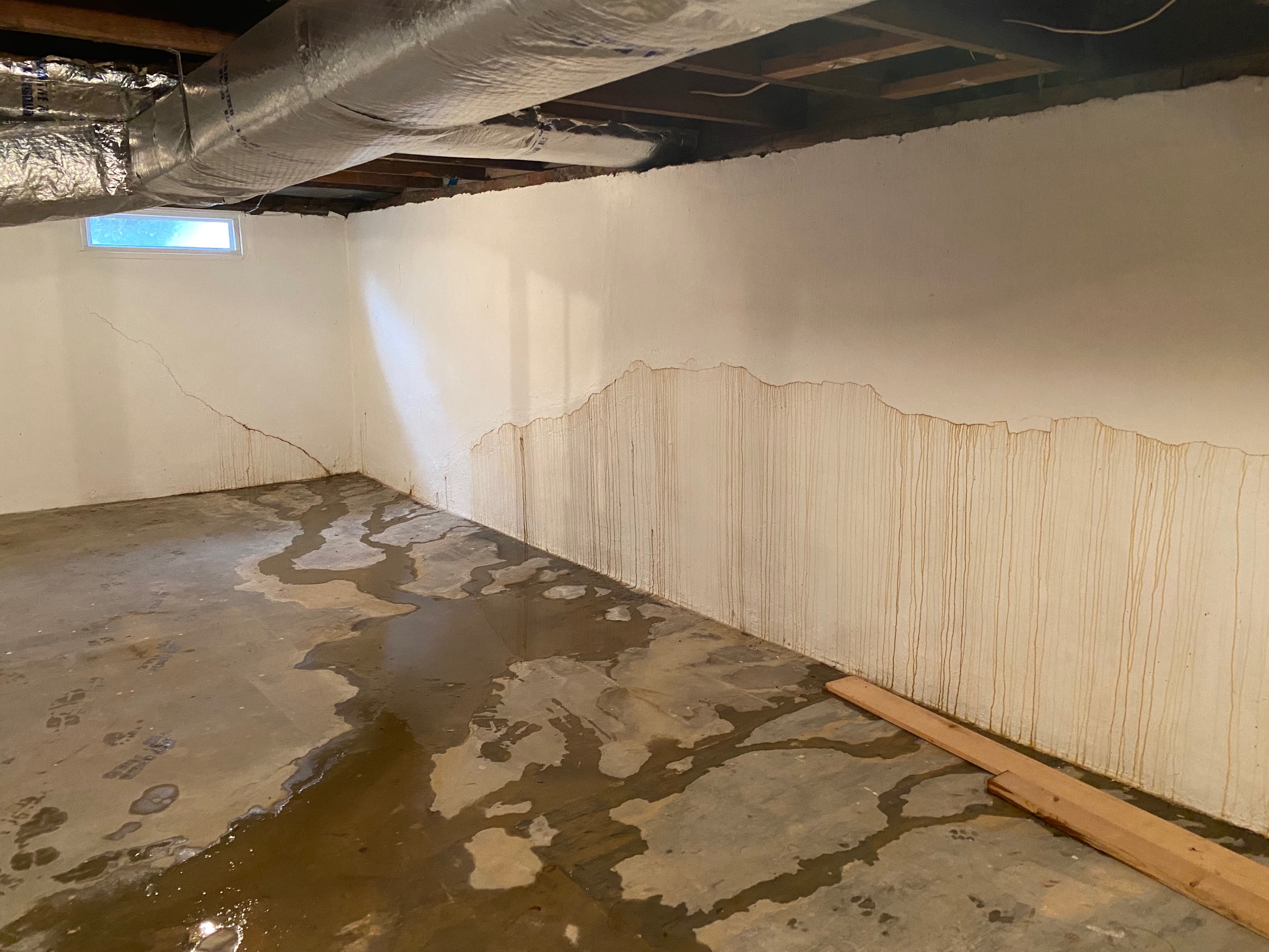
It’s essential to address these issues promptly with professional drainage solutions and waterproofing to prevent long-term damage.
Don’t ignore these signals; your home’s health and value depend on it.
Can Waterproofing Increase the Value of My Home?
Absolutely, waterproofing can increase your home’s value.
It’s a wise property investment that potential buyers will appreciate, knowing they won’t have to deal with moisture issues.
Moreover, a waterproofed basement can be converted into additional living space, adding square footage to your home.
This not only enhances your home’s functionality but also boosts its market value.
Are There DIY Methods for Basement Waterproofing?
Yes, there are several DIY methods for basement waterproofing. You can try cost-effective solutions like sealants or waterproofing paint.
These waterproofing materials can be easily applied to walls and floors to block moisture. However, for major leaks and water problems, it’s recommended to hire a professional.
How Often Should a Basement Be Waterproofed?
You should waterproof your basement every 3-5 years, but it can vary based on your home’s conditions.
Regular basement maintenance is crucial to avoid moisture-related issues. If you’re in a wet climate or have had past problems, more frequent waterproofing might be necessary.
It’s not a one-time fix, so stay vigilant about your basement’s health.
What Health Risks Are Associated With a Non-Waterproofed Basement?
If your basement isn’t waterproofed, you’re risking your health.
Dampness can lead to mold growth, which can cause respiratory problems, allergic reactions, and other health issues.
Additionally, constant moisture can cause structural damage to your home. Over time, this could make your home unsafe to live in.
So, does home insurance cover basement waterproofing? Typically, it doesn’t. Insurance focuses on unexpected damage, not maintenance like waterproofing. But, with some exceptions, you might get coverage for repairs following a covered peril. It’s crucial to understand your policy’s ins and outs. Waterproofing can be costly, so it’s worth protecting your home against water damage. Always consult with your insurance agent to clarify coverage details and ensure you’re adequately protected.

Seal-tite Basement Waterproofing Co. is a full service basement environment contractor. We carry an A+ Better Business Bureau rating. We repaired over 40,000 homes and structures in Virginia, West Virginia, Tennessee, and North Carolina. We are fully insured and licensed. We have worked in all types of locations, including residential and commercial locations, government agencies, colleges, hospitals, churches, and condo associations.
Seal-tite® offers a lifetime transferable warranty. We carry a Class A Contractor’s License and we are fully insured. Our satisfied customers range from government agencies to businesses, hospitals, colleges, churches, and thousands of homeowners. Your home is probably the single largest investment you will make in your lifetime. Don’t wait, call Seal-tite® to help make your home dry, safe and livable.

