
When cracks start creeping up your walls, floors become uneven, and doors refuse to close properly, it often signals one thing: your foundation is struggling. One of the most reliable and effective solutions for severe foundation settlement and instability is underpinning.
Underpinning isn’t just a temporary patch — it’s a comprehensive technique designed to stabilize and strengthen your foundation from below, addressing the root cause rather than just the symptoms.
In this article, we’ll break down what underpinning is, when it’s needed, the methods used, and why it’s one of the best investments you can make to protect your home.
🔑 Key Takeaways
- Underpinning reinforces existing foundations, providing additional support and stability.
- Common triggers include soil movement, poor construction, and increased structural loads.
- Methods include push piers, helical piers, and concrete underpinning.
- Early intervention prevents further damage and preserves property value.
- Professional evaluation is crucial to determine the best solution for each home.
What Is Foundation Underpinning?
Foundation underpinning involves extending or strengthening the foundation’s depth or breadth to rest on more stable soil layers or distribute the structural load more effectively.
Unlike cosmetic crack repairs or surface patches, underpinning addresses underlying foundation problems, such as settlement or soil instability, at their source.
When Is Underpinning Needed?
Significant Settlement
If your home’s foundation has settled unevenly, causing cracks and sloping floors, underpinning helps stabilize and potentially lift it back to its original position.
Poor Soil Conditions
Expansive or compressible soils can no longer support the foundation’s weight. Underpinning transfers the load to deeper, more stable soil or bedrock.
Increased Structural Loads
Adding a second story, heavy additions, or significant remodeling may exceed the original foundation’s capacity, requiring reinforcement.
Foundation Failure
Severe structural damage, such as large horizontal cracks, bowing walls, or tilting chimneys, often necessitates underpinning to prevent collapse.
Signs Your Home May Need Underpinning
| Sign | Possible Indication |
|---|---|
| Stair-step cracks in brick | Differential settlement. |
| Doors and windows sticking | Frame distortion from foundation movement. |
| Noticeable floor sloping | Uneven foundation settlement. |
| Gaps around window frames | Foundation pulling structural elements apart. |
| Basement wall bowing | Lateral soil pressure compromising stability. |
If you notice one or more of these signs, consult a foundation professional promptly.
Common Underpinning Methods
1. Push Piers
How They Work
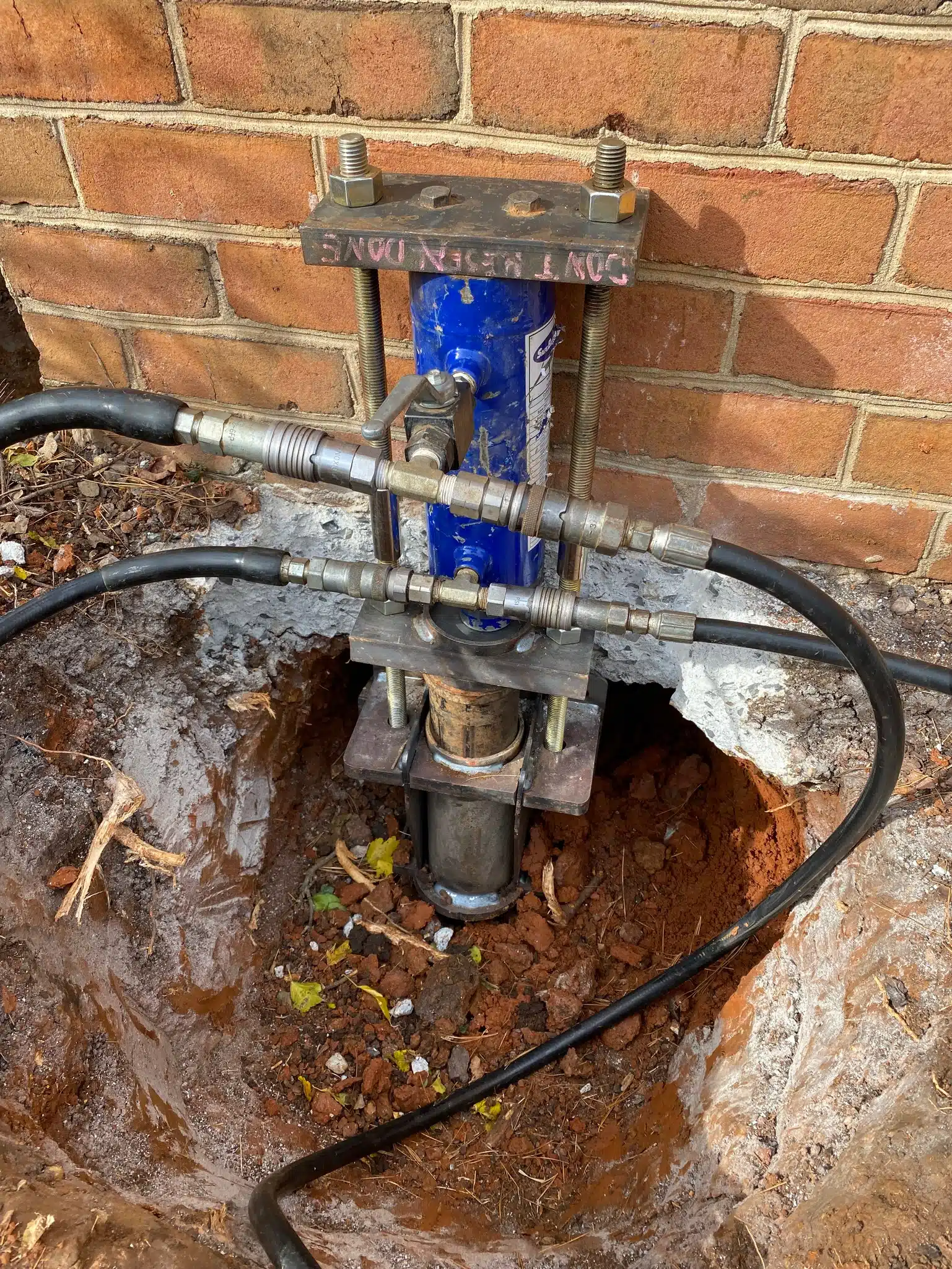
- Steel piers are hydraulically driven deep into the ground until they reach stable, load-bearing strata.
- Once secured, the weight of the home is transferred from unstable soil to the piers.
Best For
- Homes with significant settlement.
- Heavy structures that require strong support.
2. Helical Piers
How They Work
- Steel piers with helical (screw-like) plates are twisted into the ground like giant screws.
- Once anchored, they support and potentially lift the foundation.
Best For
- Lighter structures.
- Areas with deeper soft soils.
- Sites with limited access for large equipment.
3. Concrete Underpinning (Mass Pour)
How It Works
- Sections below the existing foundation are excavated and filled with concrete, extending the foundation deeper.
- Often used for shallow foundations or smaller structures.
Best For
- Homes needing increased foundation depth without extensive pier systems.
- Sites with shallow stable soil layers.
The Underpinning Process: What to Expect
Step 1: Site Evaluation
A thorough inspection of your foundation, soil conditions, and structural integrity to determine the extent of damage and the best underpinning approach.
Step 2: Engineering Design
Detailed plans are developed to guide pier placement or concrete pour depths, ensuring long-term stability.
Step 3: Installation
Depending on the method:
- Piers are installed adjacent to or beneath the foundation.
- In mass pour, sections are excavated and filled sequentially.
Step 4: Load Transfer
Gradual transfer of the home’s weight onto the new supports, sometimes accompanied by lifting to close cracks.
Step 5: Restoration
Backfilling, sealing, and restoring landscaping or concrete surfaces disturbed during the process.
Benefits of Underpinning
Structural Stability
Stops ongoing settlement and prevents further structural damage.
Potential Foundation Recovery
In some cases, underpinning can lift parts of the home back to level, reducing interior cracks and door or window misalignments.
Increased Property Value
A stabilized foundation reassures buyers and maintains the home’s marketability.
Longevity
Provides long-term support, especially when combined with improved drainage and soil moisture management.
Real-Life Example: Saving a Settling Home
A homeowner in Roanoke, VA, noticed widening cracks along interior walls and a sloping kitchen floor. Doors stopped closing properly, and the exterior brick began to show stair-step cracking.
Seal-Tite Basement Waterproofing performed a comprehensive evaluation and determined that expansive clay soil had caused significant differential settlement.
Solution Implemented:
- Installed a series of push piers around the settling perimeter.
- Gradually lifted sections of the foundation, closing interior cracks.
- Corrected exterior grading and extended downspouts to prevent future soil movement.
The result: the homeowner’s foundation was stabilized permanently, doors and windows worked properly again, and the structural integrity — and value — of the home were restored.
FAQs: Foundation Underpinning
Is underpinning a permanent solution?
Yes. When properly designed and installed, underpinning is considered a permanent solution and often comes with long-term warranties.
Can I stay in my home during underpinning?
In most cases, yes. Work is performed from the exterior or basement without major disruption to living spaces.
How long does underpinning take?
Typical projects take one to three weeks, depending on the severity and method used.
Will underpinning fix all cracks?
Underpinning stops further movement and may close some cracks, but cosmetic repairs (like drywall or masonry repointing) may still be needed afterward.
How much does underpinning cost?
Costs vary based on home size, soil conditions, and method. Projects often range from $10,000 to $40,000+, but investing early can prevent more extensive (and expensive) future repairs.
Conclusion: Strength From the Ground Up
Your home’s foundation is its anchor — and when it begins to fail, everything above it is at risk. Underpinning isn’t just another repair; it’s a strategic, engineering-based solution designed to restore and reinforce your home’s most critical structural component.
Whether caused by shifting soils, drainage issues, or added structural loads, foundation problems require decisive action. Underpinning offers peace of mind, ensuring your home remains safe, stable, and valuable for generations to come.
If you’ve noticed cracks, sloping floors, or other signs of foundation distress, don’t wait. Contact Seal-Tite Basement Waterproofing today. Our experienced team will assess your foundation and design a tailored underpinning solution that keeps your home standing strong — from the ground up.

Seal-tite Basement Waterproofing Co. is a full service basement environment contractor. We carry an A+ Better Business Bureau rating. We repaired over 40,000 homes and structures in Virginia, West Virginia, Tennessee, and North Carolina. We are fully insured and licensed. We have worked in all types of locations, including residential and commercial locations, government agencies, colleges, hospitals, churches, and condo associations.
Seal-tite® offers a lifetime transferable warranty. We carry a Class A Contractor’s License and we are fully insured. Our satisfied customers range from government agencies to businesses, hospitals, colleges, churches, and thousands of homeowners. Your home is probably the single largest investment you will make in your lifetime. Don’t wait, call Seal-tite® to help make your home dry, safe and livable.

