
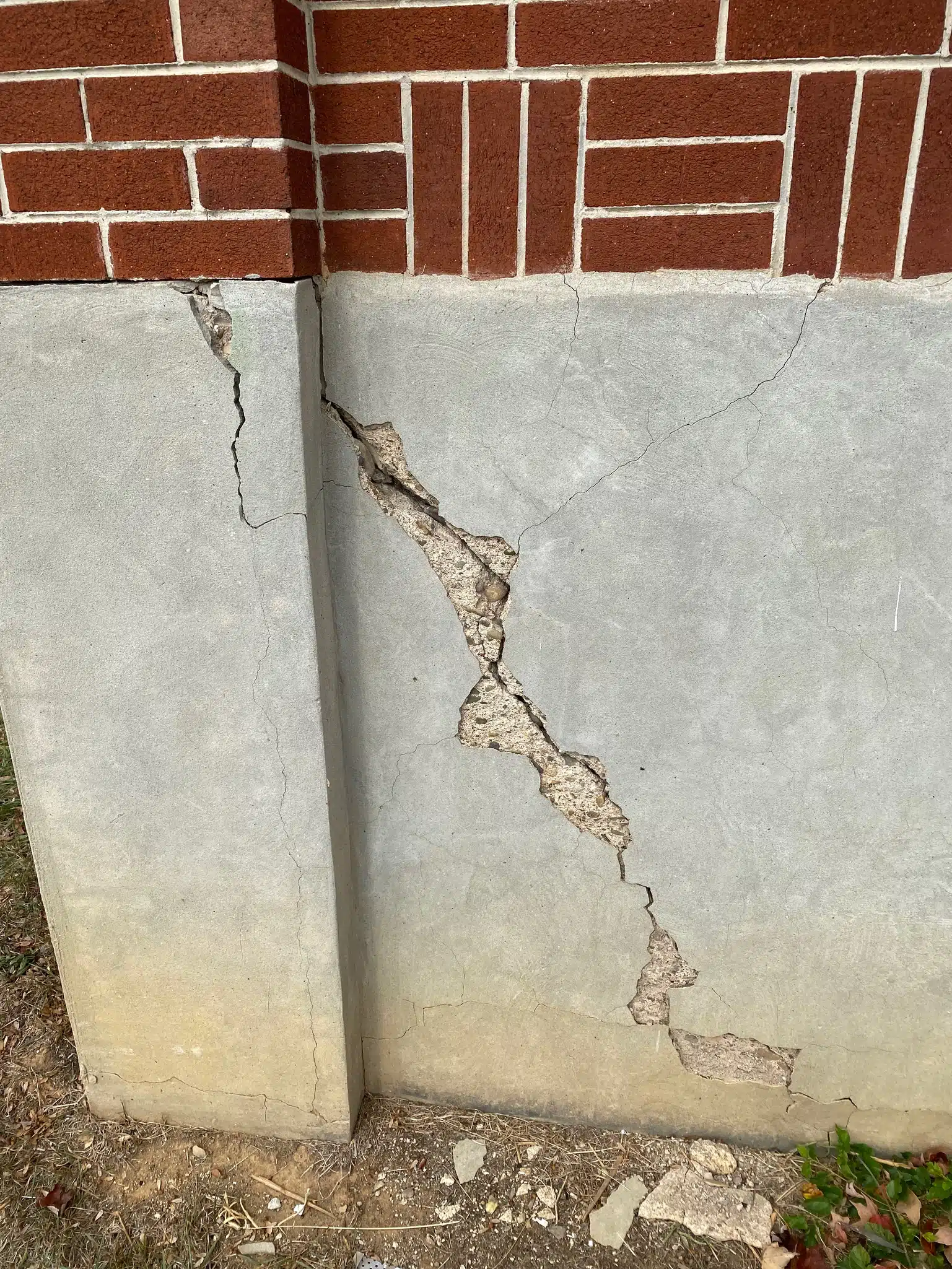
You’ve probably seen a few cracks on your walls and dismissed them as minor cosmetic issues. But have you considered they might be hinting at a more pressing problem? If they’re horizontal or resemble stair-steps, your home’s foundation might be crying out for attention. Sloping floors, doors and windows that don’t close properly, and gaps between your walls and ceiling are other red flags. Then there’s the plumbing – frequent leaks could be more than just an annoyance. These signs shouldn’t be ignored, so stick around. Let’s explore why they matter and what you can do about them.
Key Takeaways
- Noticeable cracks in walls, floors, or ceilings can indicate urgent foundation issues.
- Frequent plumbing problems like leaks may suggest pressure from a shifting foundation.
- Bulging or bowing basement walls suggest water damage and soil erosion affecting the foundation.
- Sticking doors and windows across the house could be a sign of foundation shifts.
- Sloping floors, especially if confirmed with a level, may indicate serious foundation problems.
Understanding Foundation Damage
While it may seem intimidating, understanding foundation damage is essential for maintaining the health of your home. It’s not as complex as you might think.
First, you need to understand that there are different foundation types. The three main types are slab, pier and beam, and pile foundations. The type used in your home can greatly affect its susceptibility to damage.
Next, you’ve got to evaluate the soil composition. Why? Because soils with high clay content are notorious for causing foundation problems. Clay expands when it’s wet and shrinks when it’s dry. This constant change in volume puts a lot of pressure on your foundation, leading to damage over time.
However, don’t panic if you find out that your home’s foundation is built on clay soil or if it falls into a more vulnerable foundation type. It doesn’t automatically mean you’re doomed to deal with foundation issues.
It just means you need to be more vigilant about potential problems. Regular checks and prompt attention to minor issues can save you from major headaches down the line.
Visible Cracks in Walls
If you’re noticing visible cracks in your walls, it’s time to pay attention.
These cracks might be telling you that your home’s structural integrity is at risk.
Let’s look into how you can identify these wall cracks and understand their impact on your home.
Identifying Wall Cracks
Every homeowner should be able to identify three major signs of wall cracks that indicate foundation problems. These signs aren’t just cosmetic issues, they’re warning signals that your home’s structural integrity could be at risk.
The first sign to look for is crack patterns. Horizontal, vertical, or diagonal cracks each tell a different story about the pressure your foundation is under. Stair-step cracks often appear in brick or concrete block walls, while vertical cracks are more common in poured concrete walls.
Different wall materials can also affect the type and severity of cracks. For example, plaster walls may show hairline cracks, while drywall might display larger, more obvious cracks.
To help you identify these signs, here’s a table for quick reference:
| Crack Patterns | Wall Materials |
|---|---|
| Horizontal cracks | Brick or concrete block walls |
| Vertical cracks | Poured concrete walls |
| Diagonal cracks | Any wall type |
| Stair-step cracks | Brick or concrete block walls |
| Hairline cracks | Plaster walls |
Impact on Structural Integrity
Your home’s structural integrity can be seriously compromised by visible cracks in walls.
These cracks aren’t just an eyesore; they’re a telltale sign that your home’s foundation stability is under threat. The cracks might seem small and trivial, but they’re actually a sign of a much larger, underlying issue.
They’re often the first visible signs of a structural compromise in your home’s foundation.
Left untreated, these cracks can grow larger, leading to more severe structural problems that could make your home unsafe.
They can cause doors and windows to stick, create uneven floors, and lead to other noticeable problems around your home.
Additionally, they can greatly decrease your home’s value.
Uneven or Sloping Floors
Have you noticed your floors aren’t exactly level or seem to slope in certain areas?
This could be a sign of foundation problems.
Let’s talk about how to identify these issues, understand what could be causing them, and explore potential solutions.
Identifying Floor Slope Issues
Noticing a slight slant in your floors? Don’t ignore it, as it may be a sign of a foundational issue that needs immediate attention.
Sloping floors aren’t just aesthetically displeasing, they can also lead to serious structural problems down the line.
The first step in addressing the problem is identifying the slope. You can use a level or, for more precise results, a professional slope measurement tool.
If you find your floors aren’t perfectly horizontal, it’s time to contemplate floor leveling.
Floor leveling isn’t a DIY project. It’s a complex process that involves adjusting the foundation of your home to guarantee it’s properly supporting all areas.
It requires the expertise of a professional foundation repair company.
Causes of Uneven Floors
Uneven or sloping floors in your home can be a cause for concern, signaling underlying issues with your house’s foundation. Moisture intrusion and soil erosion are primary culprits behind this issue.
Moisture intrusion occurs when water seeps into your home’s foundation, often due to poor drainage or plumbing leaks. This unwanted moisture can cause the soil beneath your home to expand, leading to an uneven floor.
Soil erosion, on the other hand, can happen due to heavy rains or inadequate landscaping. The soil supporting your foundation can be washed away, causing your house to settle unevenly. This results in sloping floors that can compromise your home’s structural integrity.
To help you understand the severity of these causes, here’s a table:
| Cause | Short-term Impact | Long-term Impact |
|---|---|---|
| Moisture Intrusion | Expansion of soil, uneven floors | Severe foundation damage, costly repairs |
| Soil Erosion | Slight unevenness, sloping floors | Major structural issues, potential home instability |
Solutions for Sloping Floors
Recognizing the causes of uneven or sloping floors is only half the battle. It’s equally important to understand the suitable solutions. Let’s explore the floor leveling options and foundation repair techniques available for your home.
When it comes to floor leveling options, self-leveling compounds are a popular choice. They’re easy to use and can correct minor slopes in your floors. However, for more severe cases, you may need to evaluate a more thorough solution like slab jacking or piering.
Slab jacking involves injecting a mixture beneath your floor to raise it to the desired level. Piering, on the other hand, uses steel posts driven through unstable soil and into the bedrock to support and raise the concrete.
Foundation repair techniques are also essential for fixing sloping floors. One common method is the use of foundation piers. These are installed to stabilize your home’s foundation and lift it back to its original level.
Another technique is the use of foundation wall anchors which can straighten and stabilize bowed or leaning walls.
Doors and Windows That Stick
When your doors and windows start sticking, it’s a clear sign that your home may need foundation repair. You may initially dismiss it as a minor nuisance, but don’t be fooled. It’s more than just an inconvenience; it’s an early warning system indicating potential foundation problems.
Sticking doors and windows can often result from door alignment issues or window frame adjustments. If your home’s foundation shifts, it can warp the frames, leading to these problems. You may struggle to open or close your doors and windows smoothly. They might even refuse to shut properly, leaving gaps.
How can you tell if it’s a foundation issue and not simply a poorly hung door or a warped window frame? Well, if you’re noticing these issues in multiple parts of your house, that’s a red flag.
Another clue is if the problem persists despite attempts to rectify it, like adjusting the frames or realigning the doors.
Don’t wait until your home’s structural integrity is dangerously compromised. If you’re dealing with sticky doors and windows, it’s time to call in a foundation repair expert. They’ll diagnose the root cause of the problem and provide a solution before it escalates.
Gaps Between Walls and Ceiling
Over time, you might start noticing gaps forming where your walls meet the ceiling. This isn’t something you should ignore. These gaps, known as ceiling gaps, are often a clear sign that you’re dealing with a serious foundation problem.
As your home ages, it’s normal for it to settle a bit, but excessive settling can cause wall separation. This is when your walls pull away from the ceiling, forming gaps. These gaps can appear anywhere in your home but are usually most noticeable in upper stories. They might start small, barely noticeable, but they can quickly grow into a major issue if not addressed.
Don’t disregard these signs. You might be tempted to write them off as purely cosmetic issues or the result of your house ‘settling’, but it’s more than that. It’s an indicator that your foundation may be shifting, which can jeopardize the structural integrity of your home.
When you see these gaps forming, it’s time to call in a professional. A foundation repair specialist can assess the situation and advise you on the best course of action.
Don’t wait until it’s too late. Your home’s safety depends on it.
Bulging or Bowing Basement Walls
Just like gaps between walls and ceiling, bulging or bowing basement walls are another telltale sign your home might need foundation repair. This alarming situation is often caused by water damage and soil erosion, which exert pressure on your home’s foundation.
What happens is this: when water seeps into the soil around your foundation, it can lead to soil expansion. This puts excessive pressure on your basement walls, causing them to bulge or bow. Soil erosion, on the other hand, can wash away the supportive soil from around your foundation, causing your home to settle unevenly and resulting in bulging walls.
Keep an eye out for these warning signs. If you’re noticing cracks or deformation in your basement walls, it’s time to call a professional. Delaying this could lead to more serious and costly damage.
| Warning Sign | Cause | Solution |
|---|---|---|
| Bulging Basement Walls | Water Damage | Drainage Improvement |
| Bowing Basement Walls | Soil Erosion | Soil Stabilization |
| Wall Cracks | Soil Expansion | Foundation Repair |
| Deformed Walls | Uneven Settling | Foundation Leveling |
| Water Seepage | Poor Drainage | Waterproofing |
Frequent Plumbing Issues
You may not realize it, but frequent plumbing issues could be a sign that your home needs foundation repair. If you’re consistently dealing with pipe corrosion and water leaks, don’t just chalk it up to old pipes or bad luck. It’s possible your foundation is to blame.
When your home’s foundation shifts or settles, it can put undue pressure on your plumbing system. This pressure can cause pipes to bend, break, or corrode over time. If you’re frequently calling a plumber to fix leaks or deal with corrosion, it’s a good idea to have your foundation checked as well.
Water leaks can also cause significant damage to your foundation, creating a vicious cycle of damage and repair. As water seeps into the foundation, it can cause the soil to expand and contract. This movement can result in cracks and other structural issues.
Don’t wait until it’s too late. If you’re noticing persistent plumbing issues, get your foundation inspected. It’s not just about saving on plumbing repairs—it’s about protecting the integrity of your home.
Frequently Asked Questions
What Are the Potential Costs of Delaying Foundation Repair?
If you’re delaying foundation repair, you’re risking increased costs.
Small issues can turn into major problems, causing your foundation repair costs to skyrocket. You might face structural damage, which is expensive to fix.
The long term effects could include a decrease in your home’s value.
Can DIY Methods Effectively Repair Foundation Damage?
While you might be tempted to try DIY solutions for foundation damage, it’s important to understand that these methods often fall into the domain of foundation myths.
It’s not as simple as patching a crack or leveling a floor. Foundation repairs require professional assessment and intervention.
You risk causing more damage and increasing repair costs if you attempt to fix it yourself.
It’s best to call a professional.
Does Homeowners Insurance Typically Cover Foundation Repair?
You’re probably wondering if homeowners insurance covers foundation repair.
Well, it’s not a simple yes or no. Coverage largely depends on your policy’s specifics and the cause of the damage.
If it’s due to a covered peril like a fire or vandalism, you’re likely covered.
However, if it’s wear and tear or poor construction, you’re out of luck.
Always check your coverage limits and policy details to be sure.
How Long Does a Professional Foundation Repair Process Take?
You’re wondering about the foundation repair timeline, aren’t you?
After a professional assessment, it often takes 1-3 days for basic repairs.
However, more serious damage could require several weeks to fix.
It’s crucial not to rush this process.
Remember, every home is unique, so timelines can vary.
You’re investing in the longevity of your home, so let the professionals take the necessary time to guarantee the job is done right.
Are There Preventive Measures to Avoid Foundation Damage?
Absolutely, you can take preventive measures to avoid foundation damage.
It’s essential to maintain your home’s foundation regularly. Make sure the soil around your house has proper drainage to prevent water build-up. If water pools near your foundation, it can cause damage over time.
Also, keep an eye out for cracks and repair them promptly.
Conclusion
Don’t ignore the signs of foundation damage. If you’re seeing cracks in your walls, uneven floors, sticking doors and windows, or gaps between your walls and ceilings, it’s time for a repair. Even frequent plumbing issues can signal foundation problems. Remember, acting now can save you money and maintain your home’s integrity. Don’t let the problem escalate. Trust your instincts and get your foundation checked today.

Seal-tite Basement Waterproofing Co. is a full service basement environment contractor. We carry an A+ Better Business Bureau rating. We repaired over 40,000 homes and structures in Virginia, West Virginia, Tennessee, and North Carolina. We are fully insured and licensed. We have worked in all types of locations, including residential and commercial locations, government agencies, colleges, hospitals, churches, and condo associations.
Seal-tite® offers a lifetime transferable warranty. We carry a Class A Contractor’s License and we are fully insured. Our satisfied customers range from government agencies to businesses, hospitals, colleges, churches, and thousands of homeowners. Your home is probably the single largest investment you will make in your lifetime. Don’t wait, call Seal-tite® to help make your home dry, safe and livable.

